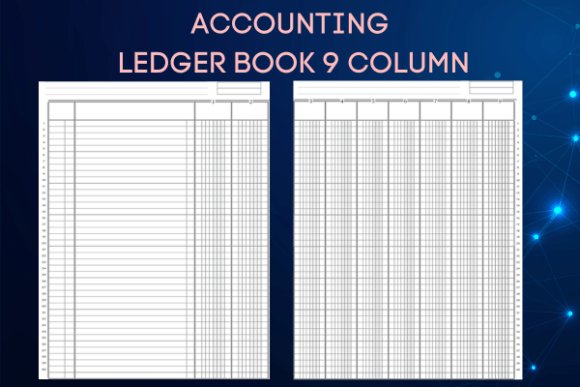
Understanding the Accounting Ledger Book 9 Column: A Practical Guide
The Accounting Ledger Book 9 Column is a structured tool used by professionals to record and track financial transactions. It provides a systematic way to categorize debits, credits, and balances, making it an essential resource for maintaining accurate financial records. Unlike simpler ledger formats, the 9-column design allows for greater detail and clarity in financial tracking, particularly for businesses that require comprehensive bookkeeping.
What Makes the 9-Column Ledger Unique?
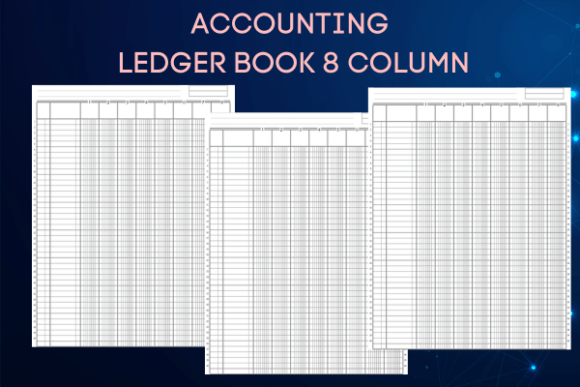
The Accounting Ledger Book 9 Column stands out due to its layout, which includes columns for date, description, account number, debit, credit, balance, and additional notes. This structure supports more detailed entries compared to a 6-column ledger, which typically focuses on fewer categories. The extra columns allow users to document multiple accounts or transactions within a single entry, improving efficiency and reducing the need for multiple pages.
This format is especially useful for businesses that handle complex financial activities, such as inventory management, multi-account tracking, or interdepartmental transactions. The ability to include more data points helps ensure that every transaction is clearly documented and easily traceable.
Comparing the 9-Column Ledger with Other Options
When evaluating accounting tools, the Accounting Ledger Book 9 Column often comes up against alternatives like the 6-column ledger, digital accounting software, and other specialized forms. Each has its own strengths and limitations, depending on the user's needs.
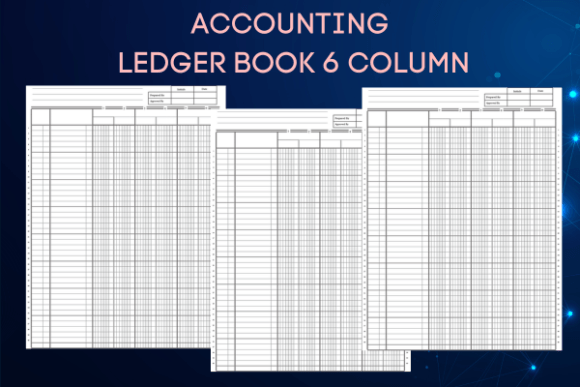
The 6-column ledger, for example, is simpler and may be sufficient for small businesses or individuals managing basic financial records. It includes columns for date, description, debit, credit, balance, and a note section. While this format is easier to use, it lacks the depth of the 9-column version, making it less suitable for organizations with more complex financial structures.
On the other hand, digital accounting software offers automation, real-time updates, and integration with other financial tools. However, some users prefer the tactile nature of a physical ledger, especially when working offline or in environments where digital access is limited. The Accounting Ledger Book 9 Column can complement digital systems by providing a backup or alternative method for manual record-keeping.
Key Features of the 9-Column Ledger
The Accounting Ledger Book 9 Column is available in various formats, including PDF and InDesign files, which cater to different user preferences. These digital versions are ideal for those who want to customize the layout or print the ledger themselves. They also support commercial use, making them a practical choice for businesses that need to produce multiple copies or integrate the design into their branding.
One notable feature is the absence of bleed pages, which ensures that the final printed version maintains clean edges without any excess ink or paper. This detail is important for professional settings where appearance matters, such as in client presentations or internal audits.
The dimensions of the ledger—8.5×11 inches—make it compatible with standard printers and easy to store. Whether used in a home office or a corporate environment, the size is convenient for both daily use and long-term record-keeping.
When the 9-Column Ledger Is the Right Choice
The Accounting Ledger Book 9 Column is best suited for users who require a high level of detail in their financial records. This includes small to medium-sized businesses, independent contractors, and financial professionals who manage multiple accounts or complex transactions. Its structured format helps reduce errors and improves the accuracy of financial reporting.
For instance, a business owner tracking income from multiple sources might find the 9-column ledger more efficient than a 6-column version. The additional columns can accommodate separate entries for different revenue streams, expenses, or accounts, making it easier to analyze financial performance at a glance.
Additionally, the availability of digital files like PDF and InDesign makes the ledger adaptable for users who want to modify the design or integrate it into existing workflows. This flexibility is valuable for businesses that need to maintain consistency in their documentation practices.
Situations Where Other Options May Be Better
While the Accounting Ledger Book 9 Column offers many advantages, it may not be the best fit for every user. For example, individuals or businesses with straightforward financial needs might find the 6-column ledger sufficient. The simplicity of the 6-column format reduces the learning curve and minimizes the time required to complete each entry.
Similarly, businesses that rely heavily on digital tools may prefer cloud-based accounting platforms over physical ledgers. These platforms offer features like automatic backups, real-time collaboration, and advanced reporting capabilities that are difficult to replicate with a traditional ledger. However, the 9-column ledger can still serve as a complementary tool for those who value manual oversight or have limited access to digital resources.
Another consideration is the cost of production. While the 9-column ledger is available as a downloadable file, printing and binding costs may add up for large-scale use. In contrast, digital solutions often come with lower overhead, making them more cost-effective for organizations with high-volume record-keeping needs.
Choosing the Right Tool for Your Needs
Selecting the appropriate accounting tool depends on several factors, including the complexity of your financial activities, your preferred method of record-keeping, and your budget. The Accounting Ledger Book 9 Column is a strong option for users who want a detailed, customizable, and professional-looking solution.
However, it’s important to evaluate all available options before making a decision. Consider how frequently you’ll use the ledger, whether you need to track multiple accounts, and whether you prefer digital or physical tools. By understanding your specific requirements, you can choose the most effective resource for your financial management needs.
In many cases, the Accounting Ledger Book 9 Column provides a balanced combination of detail, flexibility, and usability. Whether used alone or alongside other tools, it can help ensure that your financial records remain accurate, organized, and easy to reference.